


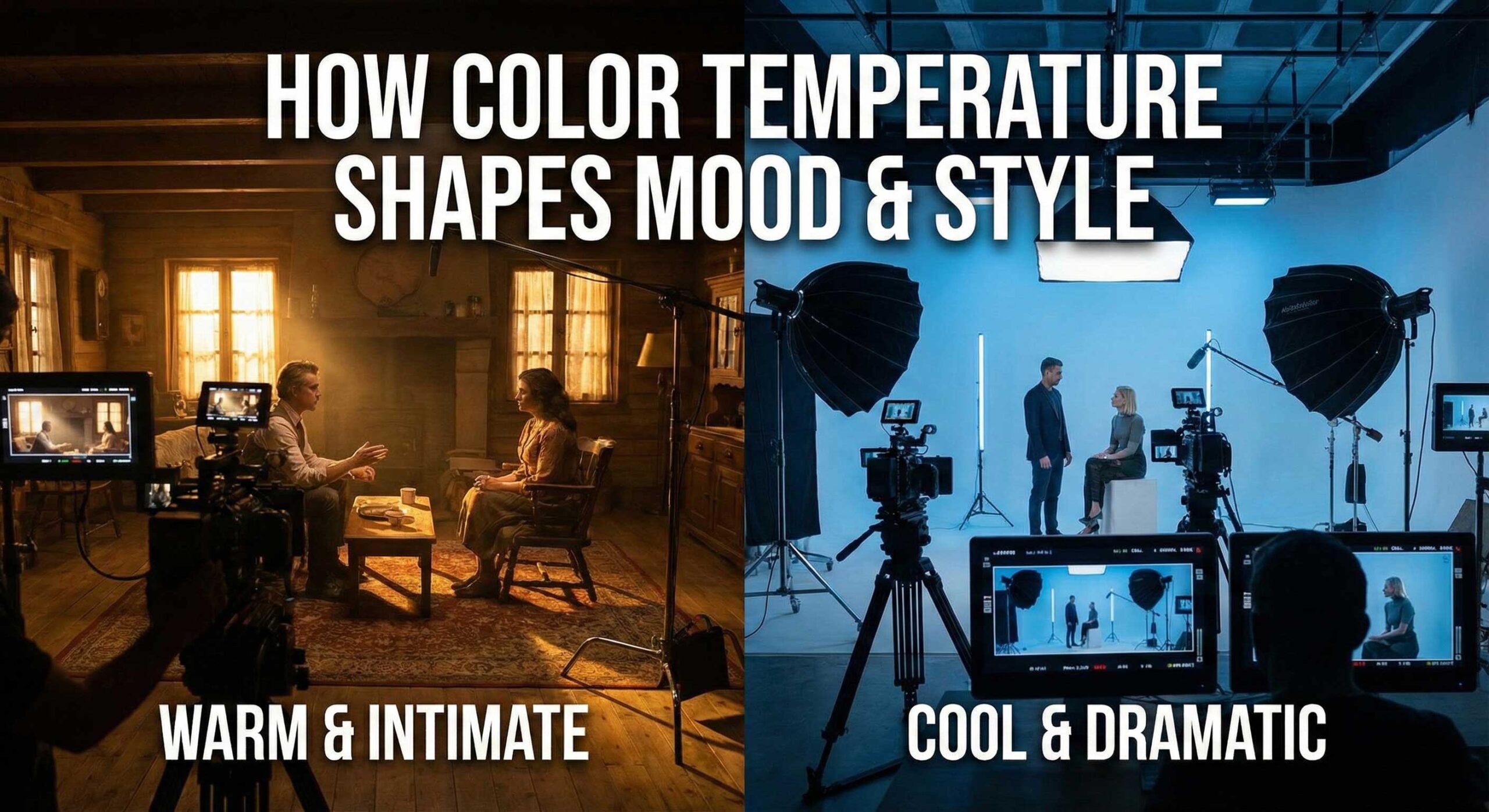
Color temperature is one of the most powerful yet underutilized creative tools in video production. While many creators focus on camera settings, composition, and editing techniques, the warmth or coolness of your lighting profoundly influences how viewers perceive and emotionally respond to your content. Understanding and intentionally controlling color temperature transforms videos from technically competent to emotionally resonant, creating distinct moods and styles that elevate storytelling and viewer engagement.
Understanding Color Temperature Fundamentals
Color temperature is measured in Kelvin (K) and describes the warmth or coolness of light on a spectrum from warm orange tones to cool blue tones. Lower Kelvin values (2000K-3500K) produce warm, orange-to-yellow light reminiscent of candlelight, sunset, or traditional tungsten bulbs. Mid-range values (4000K-5000K) appear neutral and natural, similar to daylight during most of the day. Higher values (5500K-7000K+) create cool, blue-toned light like overcast skies or open shade.
The human brain associates these color temperatures with specific times of day, environments, and emotional states based on our evolutionary experience with natural light. Warm light signals sunset, firelight, and indoor comfort. Cool light suggests midday alertness, clinical precision, or cold outdoor environments. These associations aren’t learned—they’re hardwired into how we process visual information, making color temperature a universal language that crosses cultural boundaries.
Warm Light for Intimacy and Comfort
Warm color temperatures between 2700K and 3500K create feelings of intimacy, comfort, and nostalgia. This range mimics the golden hour light photographers prize, candlelight’s romantic glow, and the cozy warmth of home environments. Content creators use warm lighting to make viewers feel welcome, relaxed, and emotionally connected to subjects.
Lifestyle content benefits enormously from warm lighting. Morning routines, evening wind-down content, and “day in my life” videos shot with warm tones create the cozy, relatable atmospheres that drive engagement. The warm glow subconsciously tells viewers “this is a comfortable, safe space,” encouraging them to settle in and watch longer.
Beauty and skincare content also leverages warm lighting effectively. While accurate color rendering requires careful balance, slightly warm tones flatter most skin types and create the aspirational, glowing look viewers associate with health and beauty. The key is staying warm enough to be flattering without becoming so orange that product colors appear inaccurate.
Food content shot with warm lighting appears more appetizing and inviting. The golden tones enhance browns and reds, making cooked foods look richer and more delicious. Warm light also creates the comforting association with home cooking and family meals, perfect for recipe content and cooking shows.
Cool Light for Energy and Professionalism
Cool color temperatures between 5000K and 6500K create entirely different psychological effects. Cool light feels energetic, alert, and professional. It suggests clarity, precision, and modernity. Content requiring perceived objectivity or technical authority benefits from cooler lighting that signals professionalism and trustworthiness.
Tech reviews and product demonstrations often use cool lighting to create clean, modern aesthetics that match the products being reviewed. The cooler tones align with how we perceive technology and innovation—sleek, forward-thinking, and sophisticated. This lighting choice subconsciously reinforces the creator’s authority on technical subjects.
Educational and tutorial content frequently employs cool lighting to create focused, attentive atmospheres. The cool tones help viewers shift into learning mode, signaling that the content requires concentration rather than passive entertainment. This works particularly well for skill-building content like coding tutorials, language lessons, or professional development topics.
Fitness and wellness content uses cool lighting to create energetic, motivational environments. The cooler tones suggest daytime vitality and active engagement, perfect for workout videos, yoga instruction, or health-focused content. The lighting choice supports the content’s goal of inspiring viewers to take action.
Neutral Light for Versatility and Authenticity
Color temperatures between 4000K and 5000K occupy the neutral zone, appearing neither distinctly warm nor cool. This neutrality makes them incredibly versatile, working across diverse content types without imposing specific emotional frameworks. Neutral lighting lets content and subjects speak for themselves without color temperature adding interpretive layers.
Interview content often uses neutral lighting to avoid influencing viewer perception of subjects through color psychology. When capturing authentic conversations, perspectives, or testimonials, neutral lighting maintains objectivity and allows viewers to form opinions based on content rather than subconscious color associations.
Documentary-style content benefits from neutral lighting that feels natural and unmanipulated. When credibility and authenticity are paramount, avoiding strongly warm or cool lighting prevents the impression that you’re trying to emotionally manipulate viewers. The neutral approach signals transparency and honesty.
Creating Contrast Through Mixed Color Temperatures
While matching color temperatures across all lights creates cohesive, professional results for most content, deliberately mixing warm and cool lighting can create dramatic, stylized effects. This advanced technique requires careful execution but produces distinctive looks that immediately grab attention.
Warm key light with cool background light creates striking separation and depth. The warm-lit subject appears to emerge from cooler surroundings, creating three-dimensional depth and visual interest. This technique works particularly well for dramatic content, music videos, or any situation where you want subjects to feel isolated or highlighted against their environment.
Cool key light with warm background creates the opposite effect—a clinical, modern subject against warmer, more nostalgic surroundings. This contrast can suggest tension between past and present, tradition and innovation, or emotional distance and warmth. The specific interpretation depends on context, but the contrast creates visual and emotional complexity.
Cyberpunk and neo-noir aesthetics frequently employ extreme warm/cool contrasts—magenta and cyan, orange and teal—creating immediately recognizable stylistic signatures. While these extreme contrasts work for specific genres and aesthetics, they can appear gimmicky if misapplied. Use them deliberately to support your content’s style rather than following trends blindly.
Time of Day Associations
Viewers subconsciously associate color temperatures with specific times of day, and you can leverage these associations to set temporal context without explicitly stating time. Very warm light (2500K-3000K) suggests sunset, sunrise, or evening. Neutral to slightly warm light (4000K-5000K) reads as midday or general daytime. Cool light (5500K+) can suggest morning, overcast conditions, or the blue hour before sunrise.
This implicit time-setting through color temperature helps establish narrative context efficiently. A vlog segment shot with warm 3200K lighting feels like evening even if you never mention the time. Cool 6000K lighting in a productivity video reinforces morning energy without explicit explanation. These subtle cues help viewers orient themselves within your content’s timeline and rhythm.
Cultural and Genre Expectations
Different content genres have established color temperature conventions that viewers expect, even if they don’t consciously recognize them. Deviating from these conventions can create distinctive styles or confuse audiences, depending on execution.
Horror and thriller content traditionally uses cool, desaturated lighting to create unease and tension. The cold blue tones feel alien and uncomfortable, putting viewers on edge. Gaming content, particularly streaming, often features vibrant RGB lighting mixing warm and cool in energetic, chaotic patterns reflecting the dynamic nature of gameplay.
Romance and relationship content gravitates toward warm lighting that reinforces emotional connection and intimacy. Corporate and business content uses neutral to cool lighting projecting professionalism and competence. Understanding these genre conventions helps you either meet viewer expectations or deliberately subvert them for creative effect.
Practical Application Strategies
Translating color temperature theory into practice requires both technical knowledge and artistic sensitivity. Start by identifying the primary emotion or atmosphere you want to create, then choose color temperatures supporting that goal. Test different temperatures while shooting to see how they affect mood in real-time.
Maintain consistency within scenes while allowing temperature to shift between scenes as mood or time changes. Abrupt color temperature shifts within a single scene feel jarring unless you’re deliberately creating disorientation. Gradual shifts can suggest time passing or emotional states evolving.
Use your camera’s white balance settings creatively. Setting white balance cooler than your actual light source makes footage appear warmer. Setting it warmer than your light source creates cooler-looking footage. This technique allows fine-tuning color temperature in-camera rather than relying entirely on post-production correction.
Color Temperature in Post-Production
While proper in-camera color temperature saves time and maintains quality, post-production offers additional creative control. Color grading tools allow precise adjustments to color temperature across your entire video or specific segments, creating cohesive looks or intentional variations.
Consistent color grading across your content library builds recognizable visual branding. Many successful creators develop signature color temperature approaches that make their content instantly identifiable. This consistency strengthens brand recognition and helps content stand out in crowded feeds.
However, avoid using post-production as a crutch for poor in-camera color temperature choices. Extreme corrections in editing degrade image quality and create unnatural-looking results. Get as close as possible to your desired look while shooting, then use post-production for refinement rather than radical transformation.
Common Color Temperature Mistakes
Many creators make avoidable mistakes that undermine their content’s visual quality and emotional impact. Mixing color temperatures unintentionally creates confusing, amateurish looks. Ensure all lights illuminating a subject match color temperature unless you’re deliberately creating mixed-temperature effects.
Ignoring ambient light color temperature causes problems when it contributes significantly to your overall lighting. If you’re filming near windows during sunset, that warm orange light affects your scene even if your artificial lights are set to 5500K. Match your lights to ambient conditions or control ambient light through curtains or strategic positioning.
Over-correcting in post-production creates unnatural skin tones and color casts. While you can adjust color temperature in editing, pushing too far from the original capture creates artifacts and degrades quality. This particularly affects skin tones, which viewers instantly recognize as unnatural when color temperature is wrong.
Developing Your Color Temperature Style
As you gain experience, you’ll develop preferences and signature approaches to color temperature that become part of your visual identity. Some creators gravitate toward consistently warm, inviting aesthetics. Others prefer cool, modern looks. Many develop specific color temperature palettes for different content types within their channel.
Document your color temperature choices that produce results you love. Note the Kelvin settings, lighting positions, and post-production adjustments that created successful looks. Build a library of reference images showing your preferred color temperatures for various content types. This documentation accelerates your workflow and ensures consistency.
Experiment deliberately with color temperatures outside your comfort zone. If you typically shoot warm, try cool. If you default to neutral, explore the extremes. These experiments expand your creative toolkit and help you discover new possibilities for visual storytelling through color temperature.
Conclusion
Color temperature shapes mood and style in video production more powerfully than almost any other single creative decision. Warm tones create intimacy and comfort, cool tones project energy and professionalism, and neutral temperatures offer versatile authenticity. Understanding these psychological associations and applying them intentionally transforms competent videos into emotionally resonant content that connects deeply with viewers.
Master the fundamentals of color temperature matching and consistency before exploring advanced mixed-temperature techniques. Develop awareness of genre conventions while remaining open to creative experimentation. Use color temperature deliberately to support your content’s emotional goals rather than accepting whatever your lights happen to produce.
The most successful creators treat color temperature as a creative tool rather than a technical specification. They recognize that the warmth or coolness of light fundamentally shapes how viewers experience and remember their content. By mastering color temperature, you gain precise control over the emotional atmosphere of your videos, creating distinctive styles that set your content apart while serving your creative vision and connecting authentically with your audience.