


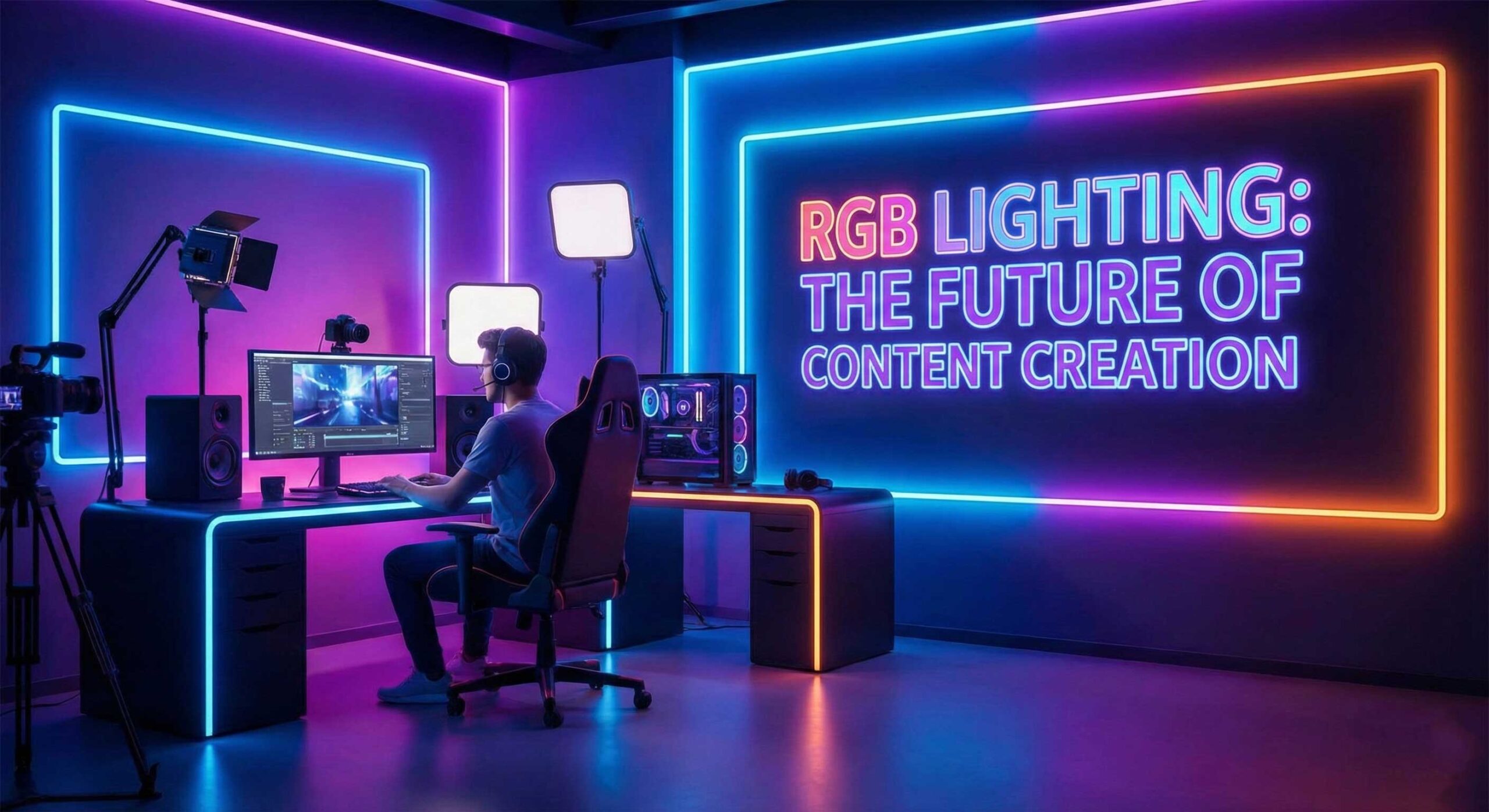
The content creation landscape is evolving at breakneck speed, and one technology stands at the forefront of this revolution: RGB lighting. What was once considered a niche tool for gaming setups and tech enthusiasts has become an essential element in professional content creation across all platforms. From YouTube creators to TikTok influencers, Instagram personalities to corporate video producers, RGB lighting is transforming how we illuminate and enhance digital content. This comprehensive guide explores why RGB lighting represents not just a trend, but the future of content creation itself.
Understanding the RGB Revolution
RGB stands for Red, Green, and Blue—the three primary colors of light that, when combined in varying intensities, can create virtually any color visible to the human eye. Traditional lighting offered creators a choice between warm and cool white light, with perhaps some basic color gels for creative effects. RGB lighting changes everything by putting millions of colors at your fingertips, controllable with simple adjustments or even smartphone apps.
The shift toward RGB isn’t arbitrary. It reflects fundamental changes in how audiences consume content, what they expect from creators, and how platforms prioritize engaging visual content in their algorithms. Understanding these shifts helps explain why RGB lighting has moved from optional to essential for serious creators.
The Platform Algorithm Advantage
Social media platforms like Instagram, TikTok, YouTube, and Facebook prioritize content that keeps viewers engaged. Their algorithms track watch time, completion rates, and engagement metrics to determine which videos to promote. RGB lighting directly impacts these metrics in ways that traditional lighting cannot.
Videos with dynamic, visually interesting lighting capture attention in crowded feeds. When users scroll through hundreds of pieces of content daily, those first few frames determine whether they stop or keep scrolling. RGB lighting creates visual hooks that stop the scroll—a purple-tinted background catches the eye differently than plain white walls, a color-changing light sequence creates movement that attracts attention, and branded color schemes build instant recognition.
Platform algorithms reward this increased engagement with more reach, creating a virtuous cycle where better lighting leads to more views, which leads to more followers, which leads to more opportunities. Creators who understand this relationship invest in RGB lighting not as a luxury, but as a strategic tool for growth.
Creative Flexibility for Diverse Content
Traditional lighting setups required physical changes to create different moods or aesthetics. Want to shoot a warm, cozy morning routine followed by a cool, professional product review? You’d need to either adjust physical filters, change lights entirely, or accept inconsistency. RGB lighting eliminates these limitations.
The YanBeam RGB+BI Color FlatLight RS25 exemplifies this new flexibility. Switch from natural white light for beauty tutorials to deep blue for tech reviews to warm amber for lifestyle content—all within seconds and without touching the physical light. This versatility is crucial for modern creators who produce diverse content types and need to maintain a consistent posting schedule.
Consider a lifestyle creator’s typical week. Monday might require bright, energetic lighting for a workout video. Tuesday needs soft, flattering tones for a skincare routine. Wednesday demands dramatic, moody lighting for a fashion shoot. Thursday requires accurate white light for product photography. Friday needs vibrant, party-ready colors for a weekend prep video. RGB lighting handles all of these scenarios with a single piece of equipment, making it both cost-effective and space-efficient.
Brand Identity and Visual Recognition
Successful creators develop distinctive visual identities that make their content instantly recognizable. RGB lighting plays a crucial role in establishing and maintaining this identity. Think about major YouTubers or TikTok creators—many have signature color schemes or lighting styles that viewers associate with their brand.
Purple and pink backgrounds might signal tech content from a specific creator. Cyan and magenta combinations might represent another creator’s aesthetic. These color associations aren’t accidental—they’re carefully crafted brand elements that RGB lighting makes possible and consistent.
Building brand recognition through lighting creates several advantages. Viewers can identify your content before reading titles or seeing thumbnails clearly. This instant recognition increases the likelihood they’ll stop and watch. It also creates a cohesive visual portfolio that looks professional and intentional rather than random or amateur.
RGB lighting allows you to match your lighting to your brand colors, creating visual consistency across all content. If your logo features specific colors, your lighting can reinforce that branding in every video. This level of control simply wasn’t possible with traditional lighting solutions.
The Trend Response Advantage
Social media trends move at lightning speed. A particular aesthetic might explode on TikTok on Monday and be everywhere by Wednesday. Creators who can quickly adapt to these trends gain massive advantages in reach and engagement. RGB lighting provides the agility to jump on trending aesthetics without investing in new equipment.
When neon aesthetics trend, RGB lights create those looks instantly. When pastel vibes become popular, the same lights adjust to softer tones. When dramatic, high-contrast looks gain traction, RGB lights deliver the colored backgrounds that make those styles work. The YanBeam RGB Flatlight RS20 offers this trend-responsive capability in a compact, affordable package perfect for creators who need to stay current without constant equipment investments.
This responsiveness extends beyond just following trends—it enables creating them. Many successful creators use unique RGB lighting setups to develop signature looks that others then emulate. Being a trendsetter rather than a trend follower often leads to faster growth and more engaged audiences.
Technical Advantages Over Traditional Lighting
Beyond creative benefits, RGB lighting offers several technical advantages that make it superior to traditional lighting solutions for content creation.
Flicker-Free Performance
Professional RGB LED lights operate at frequencies that eliminate flicker at any camera shutter speed or frame rate. This is crucial for creators shooting high frame rate content for slow-motion effects or using varied camera settings. Traditional fluorescent lights and even some older LED systems could create visible flicker that ruins otherwise perfect footage.
Heat Management
RGB LED lights generate significantly less heat than traditional tungsten or halogen lights. This matters enormously for home-based creators who film in bedrooms or small spaces. Hours-long filming sessions don’t turn your space into a sauna, and you don’t need to worry about lights overheating or creating fire hazards near fabrics and decorations.
Energy Efficiency
LED technology behind RGB lighting consumes far less power than traditional lighting. For creators who film extensively, this translates to lower electricity bills and the ability to run more lights simultaneously without tripping breakers or overloading circuits. This efficiency also makes RGB lights ideal for battery-powered setups for on-location filming.
Longevity and Reliability
Quality RGB LED lights can operate for tens of thousands of hours without degradation in color quality or brightness. Traditional bulbs need frequent replacement, and their color temperature shifts over time. RGB lights maintain consistent performance throughout their lifespan, making them more cost-effective long-term despite higher initial prices.
The Psychology of Color in Content
Color psychology plays a significant role in how viewers perceive and engage with content. Different colors evoke different emotional responses, and RGB lighting gives creators precise control over these psychological triggers.
Warm colors like red, orange, and yellow create feelings of energy, excitement, and warmth. They work well for motivational content, fitness videos, or high-energy entertainment. Cool colors like blue, purple, and cyan evoke calmness, professionalism, and trust—ideal for educational content, product reviews, or technical demonstrations.
Green tones suggest growth, health, and nature, making them perfect for wellness content, gardening videos, or sustainable living topics. Pink and magenta create playful, creative, or romantic moods appropriate for beauty content, DIY projects, or relationship advice.
RGB lighting allows you to match your lighting to the emotional tone of your content, creating subconscious alignment between what viewers see and what they hear. This alignment increases engagement because the visual and auditory elements work together rather than competing for attention.
Professional Applications Beyond Social Media
While social media creators are driving RGB adoption, professional applications extend far beyond Instagram and TikTok. Corporate video production, online education, virtual events, and streaming all benefit from RGB lighting capabilities.
Remote workers conducting video calls can use subtle RGB background lighting to separate themselves from their backgrounds and create more professional appearances. Online educators can use color-coding—green for correct answers, red for mistakes, blue for key concepts—to enhance learning through visual association.
Live streamers use RGB lighting to create dynamic environments that respond to gameplay, donations, or chat interactions. Product photographers employ RGB lights to create striking images without extensive post-processing. The versatility of RGB lighting makes it valuable across nearly every video-related profession.
Overcoming RGB Lighting Challenges
Despite numerous advantages, RGB lighting does present some challenges that creators should understand and plan for.
Color Accuracy for Product Content
Pure RGB lights sometimes struggle with accurate white light reproduction, which matters for product reviews, fashion content, or anything requiring true-to-life color representation. This is why hybrid solutions like the YanBeam RGB+BI Color FlatLight RS25 have become so popular—they combine RGB creative capabilities with high-CRI bi-color white light for accurate color rendering when needed.
When filming product content, use your RGB light’s white mode or bi-color setting rather than trying to create white light by mixing RGB colors. The difference in color accuracy can be dramatic and affects viewer trust in your recommendations.
Learning Curve for Effective Use
RGB lighting offers so many options that beginners sometimes feel overwhelmed. The key is starting simple. Master basic white light positioning first, then gradually incorporate color as creative elements rather than trying to use every color in every video.
For creators wanting easy smartphone-controlled RGB effects, devices like the Dreamlight Max App offer wireless control with preset lighting modes including Flash, Strobe, Fade, and Smooth. These preset modes help beginners learn what works for different content types without overwhelming complexity. The 16 million color options and app control mean you can experiment with creative effects while maintaining full control. Don’t feel pressured to use complex color combinations immediately—simple is often more effective.
Balancing Multiple Light Sources
When using multiple RGB lights, maintaining color consistency across all of them requires attention. Set all lights to identical settings to create cohesive looks, or deliberately use contrasting colors for specific effects. The mistake is accidentally having slightly different settings that create a “muddy” or unintentional look.
Integration with Existing Setups
You don’t need to replace your entire lighting setup to benefit from RGB technology. Strategic integration often works better than complete replacement.
Start by adding a single RGB light as a background accent while keeping your proven key and fill lights. This approach adds creative flexibility without sacrificing the quality and consistency you’ve already achieved. As you become comfortable with RGB lighting, you can expand its role in your setup.
For creators with established lighting systems, an RGB light makes an excellent special projects tool. Use your regular setup for standard content, then bring in RGB lighting for special videos, collaborations, or trend-responsive content that requires specific aesthetics.
Future-Proofing Your Content Creation
Technology in content creation evolves rapidly, but RGB lighting represents a mature technology that will remain relevant for years to come. The fundamental capability—producing any color of light on demand—doesn’t become obsolete. Features may improve, controls may become more sophisticated, and prices may decrease, but the core functionality remains valuable indefinitely.
Investing in quality RGB lighting now positions you to take advantage of future trends and platform changes without needing equipment upgrades. As audiences develop more sophisticated visual expectations and platforms continue prioritizing engaging content, the creative flexibility of RGB lighting becomes increasingly valuable.
Making the RGB Transition
For creators considering RGB lighting, the transition doesn’t need to be expensive or complicated. Start with a single versatile light that combines RGB with quality white light output. This gives you creative options while maintaining the ability to produce conventional content.
The YanBeam RGB Flatlight RS20 represents an accessible entry point that doesn’t compromise on quality. Its compact size makes it practical for smaller spaces, while its full RGB spectrum provides all the creative possibilities of more expensive options. As you learn what works for your content, you can expand with additional lights or more powerful models.
Test RGB lighting with different content types to discover where it adds the most value. You might find it transforms some content categories while adding little to others. This selective use often works better than forcing RGB into every video regardless of whether it enhances the content.
Measuring RGB Lighting Impact
Track your analytics before and after incorporating RGB lighting to measure its impact objectively. Monitor metrics like average view duration, click-through rates on thumbnails, engagement rates, and follower growth. If RGB lighting improves these numbers, that validates the investment. If not, adjust your approach—the lighting isn’t the problem, but how you’re using it might need refinement.
Pay attention to which videos perform best and identify patterns in how you used lighting. Did videos with subtle RGB backgrounds outperform those with dramatic color effects? Did certain color combinations work better for specific content types? Let data guide your lighting decisions rather than assuming what should work.
Conclusion
RGB lighting represents the future of content creation because it aligns perfectly with where digital content is heading. Platforms reward visually engaging content. Audiences expect professional, distinctive aesthetics. Trends move too quickly for static equipment setups. Competition increases daily as more creators enter the space.
RGB lighting addresses all of these challenges while providing creative flexibility that traditional lighting cannot match. It’s not about using every color in every video—it’s about having the tools to realize your creative vision without technical limitations. Whether you’re building brand recognition through consistent color schemes, jumping on trending aesthetics, or simply creating more engaging content that stops the scroll, RGB lighting provides capabilities that separate professional creators from amateurs.
The creators succeeding in today’s competitive landscape aren’t necessarily those with the most expensive equipment or largest budgets. They’re the ones who understand their tools and use them strategically to create content that resonates with audiences and performs well on platforms. RGB lighting is one of those strategic tools—versatile enough to grow with you, powerful enough to make a real difference, and accessible enough that any serious creator can benefit from it.
As you build or evolve your content creation setup, consider RGB lighting not as an optional extra, but as an essential component of a modern, competitive toolkit. The future of content creation is colorful, dynamic, and visually sophisticated. RGB lighting is how you get there.